



Best Roof Repair Services in Texas: How to Choose the Right Roofing Company
A statewide residential and commercial roof repair guide
Finding the best roof repair services in Texas is not simply a matter of choosing the first company that answers the phone. A dependable repair must stop the immediate water pathway, remain compatible with the existing roof, protect the surrounding assembly, and document findings. The strongest roofing contractor combines diagnosis, skilled workmanship, practical communication, and honest guidance about whether repair is still the right investment.
Showtime Exteriors is a Texas-based, full-service roofing company serving residential and commercial property owners. The team evaluates storm damage, active leaks, aging materials, drainage problems, membrane defects, flashing failures, and other conditions affecting roof performance. Review Showtime Exteriors' roofing services or call 817-400-ROOF (7663) to schedule an inspection.
This guide explains how professional roof repair should work, what separates a lasting repair from a temporary patch, which warning signs require immediate attention, how Texas weather affects different roofing materials, and when restoration or replacement becomes more responsible than continuing to repair. It also addresses David Washington's priority: aging gravel-surfaced built-up roofs can conceal deterioration and create serious inspection, maintenance, and insurance concerns.
What Makes a Roof Repair Service One of the Best in Texas?
The best roof repair companies do more than apply sealant where water appears. They investigate how water entered, how far it traveled, what materials were affected, and whether the surrounding roof can support a durable repair. A ceiling stain may be below a failed flashing, open seam, puncture, displaced shingle, deteriorated penetration, overflowing drain, wall transition, or rooftop equipment problem. Water can travel across decking, insulation, framing, or membrane layers before becoming visible indoors.
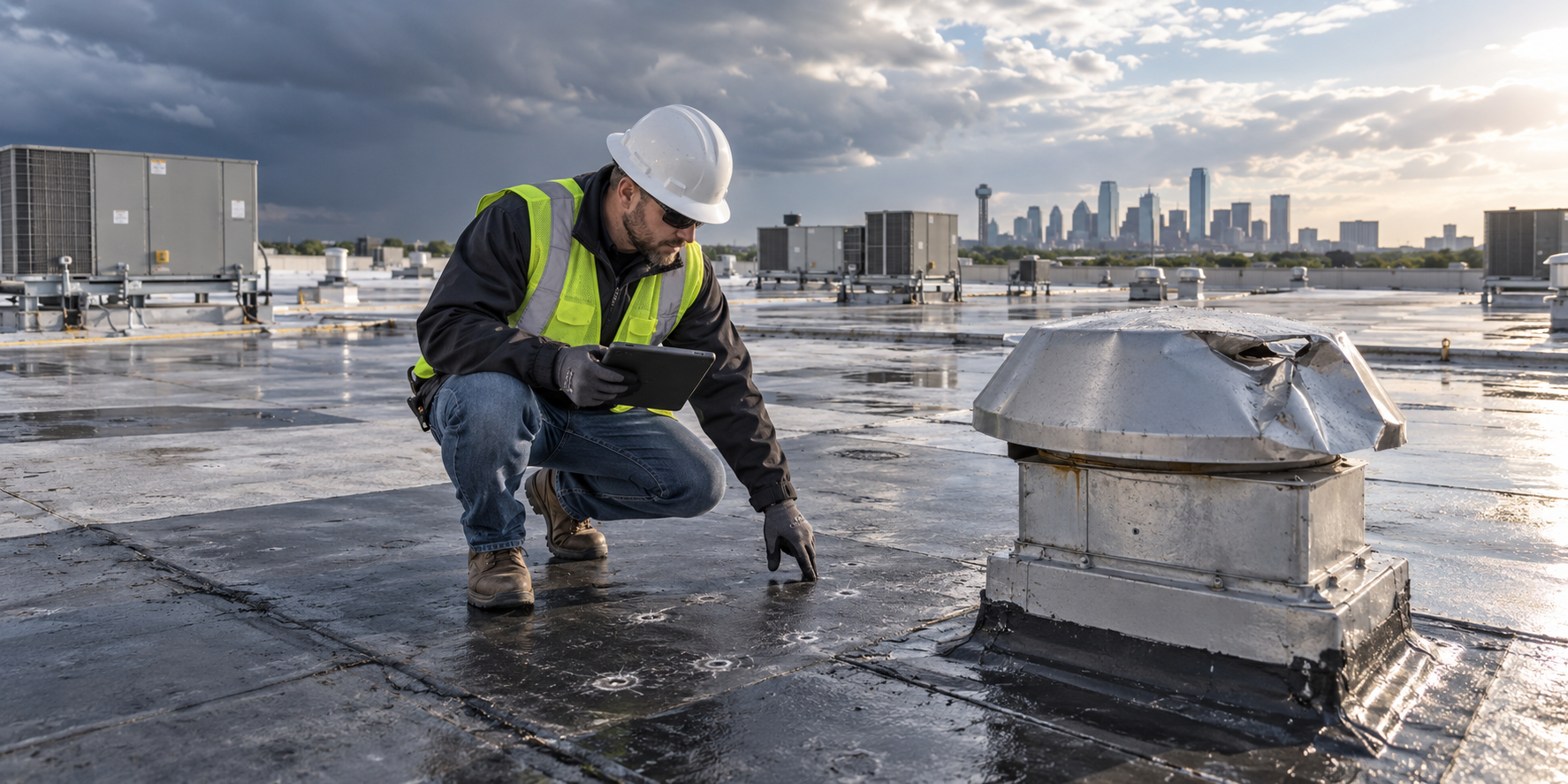
A qualified contractor therefore begins with evidence. The inspection should document the roof system, approximate age, observed defects, previous repairs, interior symptoms, drainage, penetrations, edges, and accessible substrate conditions. The proposed repair should name the materials, preparation, dimensions, removal, replacement, finishing, cleanup, and limitations. Owners should understand what the contractor knows, what remains concealed, and what outcome the proposed work is intended to achieve.
The best service is also proportionate. A responsible roofer will not recommend replacement when a localized repair can restore performance. At the same time, the contractor should not sell repeated patches when widespread moisture, brittle materials, unstable decking, or end-of-life conditions make repairs unreliable.
Why Texas Roof Repairs Require Local Experience
Texas roofs experience intense ultraviolet exposure, high surface temperatures, hail, straight-line winds, wind-driven rain, tornado-producing storms, tropical systems near the coast, freeze-thaw events in some regions, and rapid temperature changes. The exact risk varies between North Texas, Central Texas, the Gulf Coast, West Texas, and other areas, but every repair must account for the building's location and exposure.
The National Weather Service provides official forecasts, warnings, and weather information. Weather records can support a storm timeline, but they do not prove that a particular roof was damaged. A property-specific inspection must connect observed conditions with the roof system, location, and reported event.
Heat and movement matter even when no major storm occurs. Metal panels expand and contract. Membranes and flashings experience stress at transitions. Sealants age and lose adhesion. Shingles become more vulnerable as binders and granules deteriorate. Repairs made with incompatible materials may separate, crack, or trap moisture. Texas experience helps a contractor choose methods that tolerate real service conditions rather than merely looking watertight on installation day.
Signs You Need Roof Repair Now
Some conditions can be monitored and planned. Others require prompt action to reduce interior damage and preserve evidence.
Active Water Entry
Dripping water, wet ceiling tiles, saturated drywall, damp insulation, or water near electrical systems requires immediate attention. Move people and vulnerable property away from the area, use containers only when safe, and contact qualified professionals. Do not climb onto a wet or storm-damaged roof.
Emergency protection may reduce additional water entry, but a tarp or temporary patch is not a completed repair. The source still needs to be diagnosed, wet materials evaluated, and a permanent correction planned.
Missing, Lifted, or Creased Shingles
Wind can remove shingles or break their seal. Lifted tabs, creases, exposed fasteners, missing sections, or displaced ridge caps can allow water beneath the covering. A roofer should examine the surrounding field because visible loss may be only part of the affected area.
Open Seams and Membrane Punctures
On TPO, PVC, EPDM, and modified bitumen roofs, open seams, punctures, cuts, blisters, loose flashings, and failed patches deserve prompt evaluation. Rooftop traffic, service tools, hail, wind-borne debris, and equipment work can damage a membrane without producing an immediate interior leak.
Damaged Flashings and Penetrations
Roof-to-wall transitions, curbs, pipes, drains, scuppers, skylights, chimneys, vents, and edge metal are frequent leak locations. Cracked sealant is sometimes visible, but the underlying problem may involve movement, poor attachment, inadequate height, missing reinforcement, or incompatible materials.
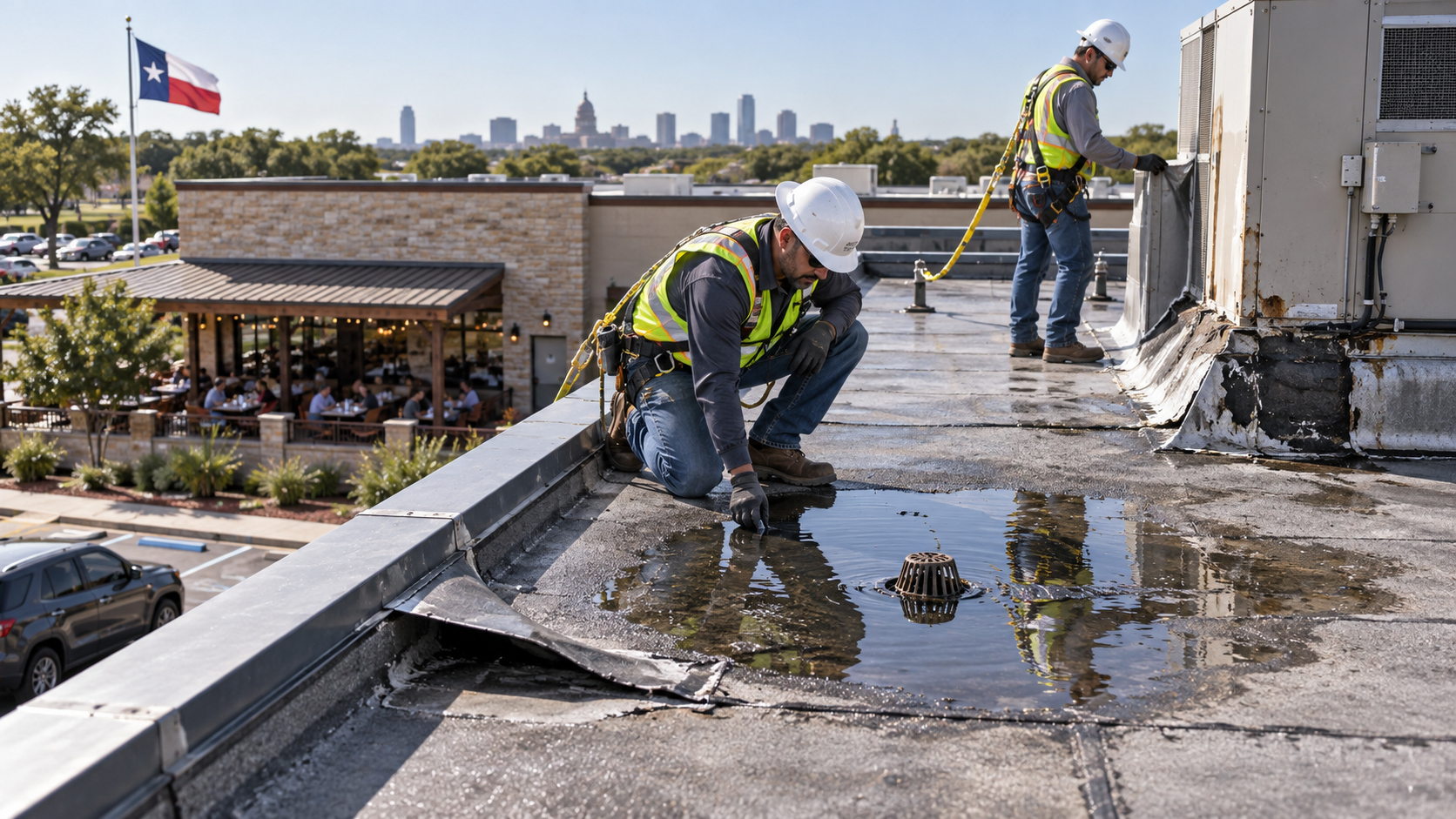
Ponding Water or Blocked Drainage
Water remaining on a low-slope roof can accelerate deterioration, load the structure, collect debris, and magnify small defects. Blocked drains should be cleared safely. Persistent ponding may require correction of insulation slope, drains, scuppers, saddles, or structural conditions rather than another surface patch.
Interior Odor, Staining, or Repeated Leaks
Recurring stains, musty odors, rust, peeling coatings, discolored decking, or repeated leak calls may indicate concealed moisture. Repeatedly sealing the visible surface without determining the extent of wet insulation or damaged substrate can allow the problem to grow.
What a Professional Roof Repair Inspection Should Include
An inspection should be systematic, not a quick glance from the ladder. The contractor should identify each roof area and record conditions in a way that another decision-maker can understand.
Exterior Roof Assessment
The roof surface, edges, penetrations, flashings, seams, transitions, drainage, rooftop equipment, and previous repairs should be examined. On steep roofs, this includes ridges, valleys, rakes, eaves, pipe boots, vents, chimneys, skylights, and wall intersections. On low-slope roofs, it includes drains, scuppers, curbs, parapets, terminations, expansion joints, walkways, and mechanical areas.
Interior and Attic Assessment
Where accessible, the contractor should review stains, deck conditions, fasteners, insulation, ventilation, and likely water pathways. Interior observations help correlate the reported leak with exterior roof areas, but the roofer should not assume the defect sits directly above a stain.
Moisture Investigation
When concealed moisture is suspected, appropriate tools may include moisture meters, infrared scanning, controlled test cuts, or core samples. Each method has limitations. Infrared patterns require interpretation and suitable conditions. Core samples reveal the assembly only at selected locations. Findings should be confirmed and used to define the repair boundary.
Photographs and Written Findings
A useful report includes overview photographs, closeups, location references, observations, limitations, and recommended actions. It should separate emergency defects, maintenance needs, repairable problems, and capital-planning concerns. Owners can learn more about Showtime Exteriors' approach through its roofing resources and articles.
Emergency Repair Versus Permanent Repair
Emergency service is designed to reduce immediate exposure. It may include a tarp, temporary membrane, controlled seal, drain clearing, interior protection, or removal of loose debris. The crew should document the original condition before covering it whenever safety and circumstances allow.
A permanent repair integrates compatible materials into a stable surrounding roof. The area is cleaned and prepared, damaged or wet components are removed as required, the substrate is corrected, the repair is installed according to the system, and edges or seams are checked. Permanent work may need dry weather, manufacturer-specific products, additional investigation, or coordination with other trades.
Property owners should ask the contractor to label temporary work clearly and provide the next step. A temporary patch that remains unexamined for months can conceal continued moisture entry and complicate later repairs.
Repair, Restore, or Replace: How the Decision Is Made
When Repair Makes Sense
Repair is usually reasonable when the defect is localized, the surrounding materials remain serviceable, wet components can be removed, compatible materials are available, and the repair can be integrated into the existing assembly. Examples include a limited shingle loss, isolated puncture, failed pipe boot, small open seam, damaged flashing, or localized metal detail.
When Restoration May Work
Restoration may be considered when the roof is fundamentally sound, moisture is limited, adhesion is acceptable, drainage is manageable, and the existing surface can receive the specified system. A restoration scope commonly includes cleaning, repairs, reinforcement at details, primers, and a compatible coating.
Coating is not a shortcut around investigation. It should not be installed over saturated insulation, unstable decking, widespread membrane failure, contaminated surfaces, or unresolved drainage. Adhesion tests, moisture evaluation, repair details, and manufacturer requirements should guide the decision.
When Replacement Is More Responsible
Replacement may offer better value when deterioration is widespread, moisture is extensive, repairs are recurring, the deck is compromised, multiple incompatible layers exist, the roof has little reliable service life remaining, or a durable repair cannot be tied into stable materials.
Replacement also allows owners to correct drainage, insulation, attachment, perimeter, access, penetration, and equipment conditions that contributed to failure. Showtime Exteriors provides commercial roof repair and replacement services across Texas.
David's Priority: Aging Gravel-Surfaced BUR Is a Liability
Built-up roofing with gravel surfacing deserves direct, cautious treatment. Gravel can hide cracks, blisters, deteriorated felts, failed laps, old patches, membrane erosion, and water pathways. It makes the waterproofing layer harder to see, complicates leak tracing, and can limit the usefulness of a surface-only inspection.
Many gravel-surfaced BUR systems are also older. Age alone does not prove failure, but an older assembly with repeated leaks, uncertain moisture conditions, and limited documentation creates significant risk. Some insurance carriers may request more information, limit coverage, raise premiums, impose conditions, or decline renewal based on roof type, age, condition, claims history, or underwriting rules. A roofing contractor cannot guarantee how a carrier will respond.
The correct strategy is not to praise gravel as a benefit or hide the system beneath a cosmetic treatment. Selected gravel may need to be moved so the membrane can be examined. Moisture scanning and core samples may be appropriate. Flashings, drains, edges, insulation, and decking must be evaluated. If the assembly is deteriorated, difficult to document, or approaching the end of useful service, replacement with a more visible and maintainable system may strengthen the owner's long-term risk plan.
Commercial owners should schedule this evaluation before a renewal deadline whenever possible. A clear condition report, repair history, photographs, moisture findings, and replacement plan give the owner better information for discussions with an insurance professional. They do not promise coverage or a particular premium.
Roof Repair Methods by Roofing System
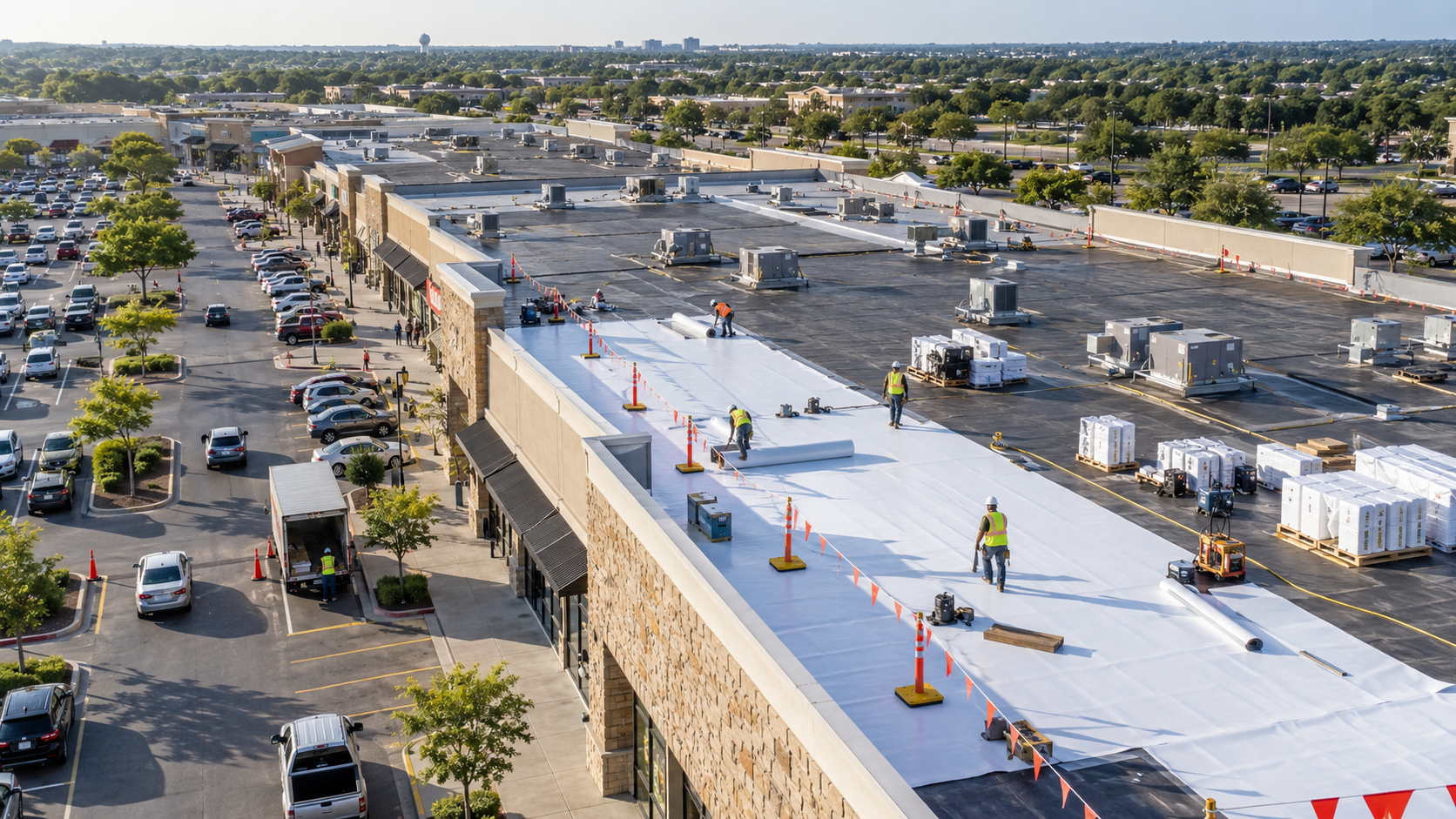
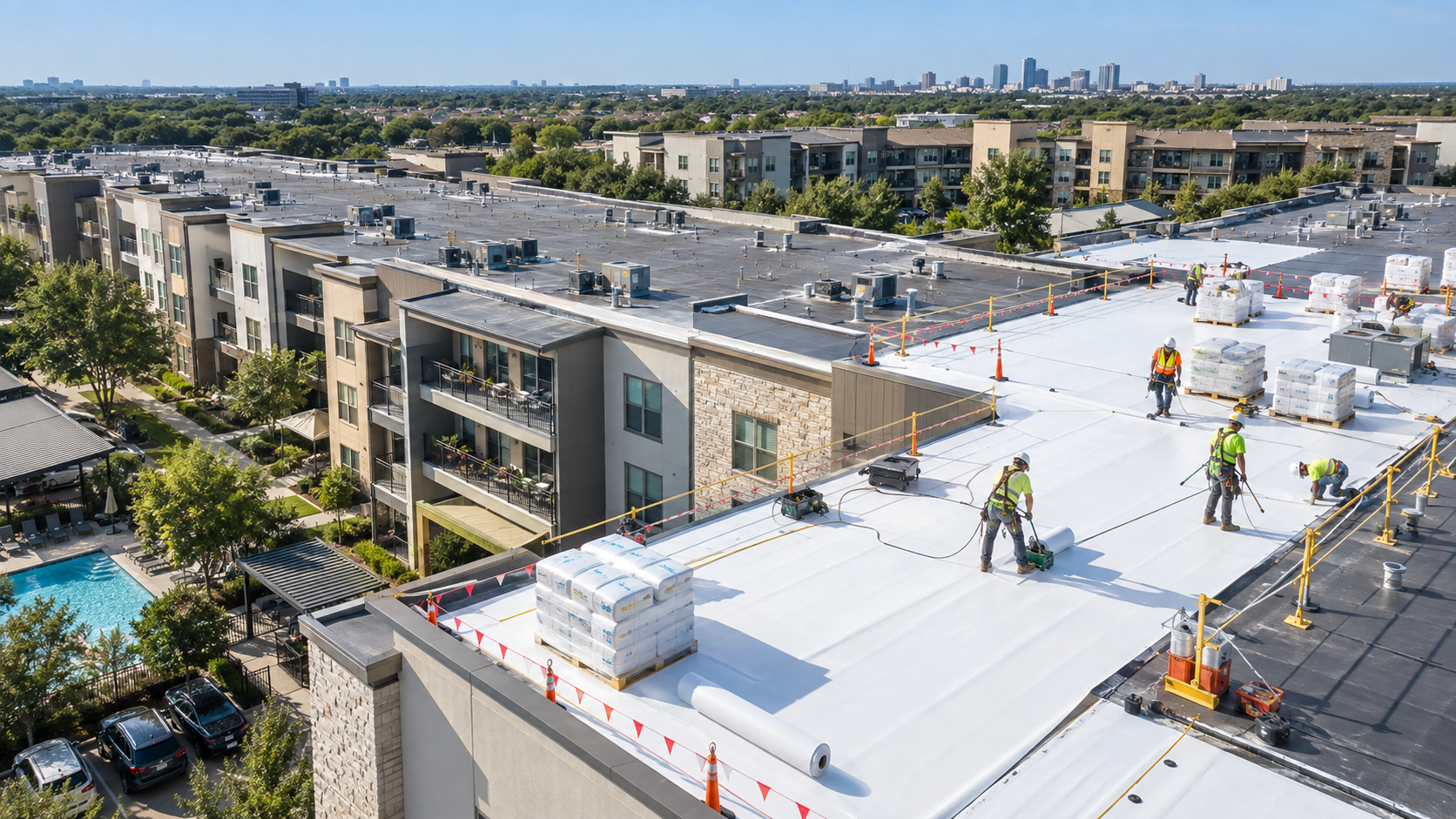
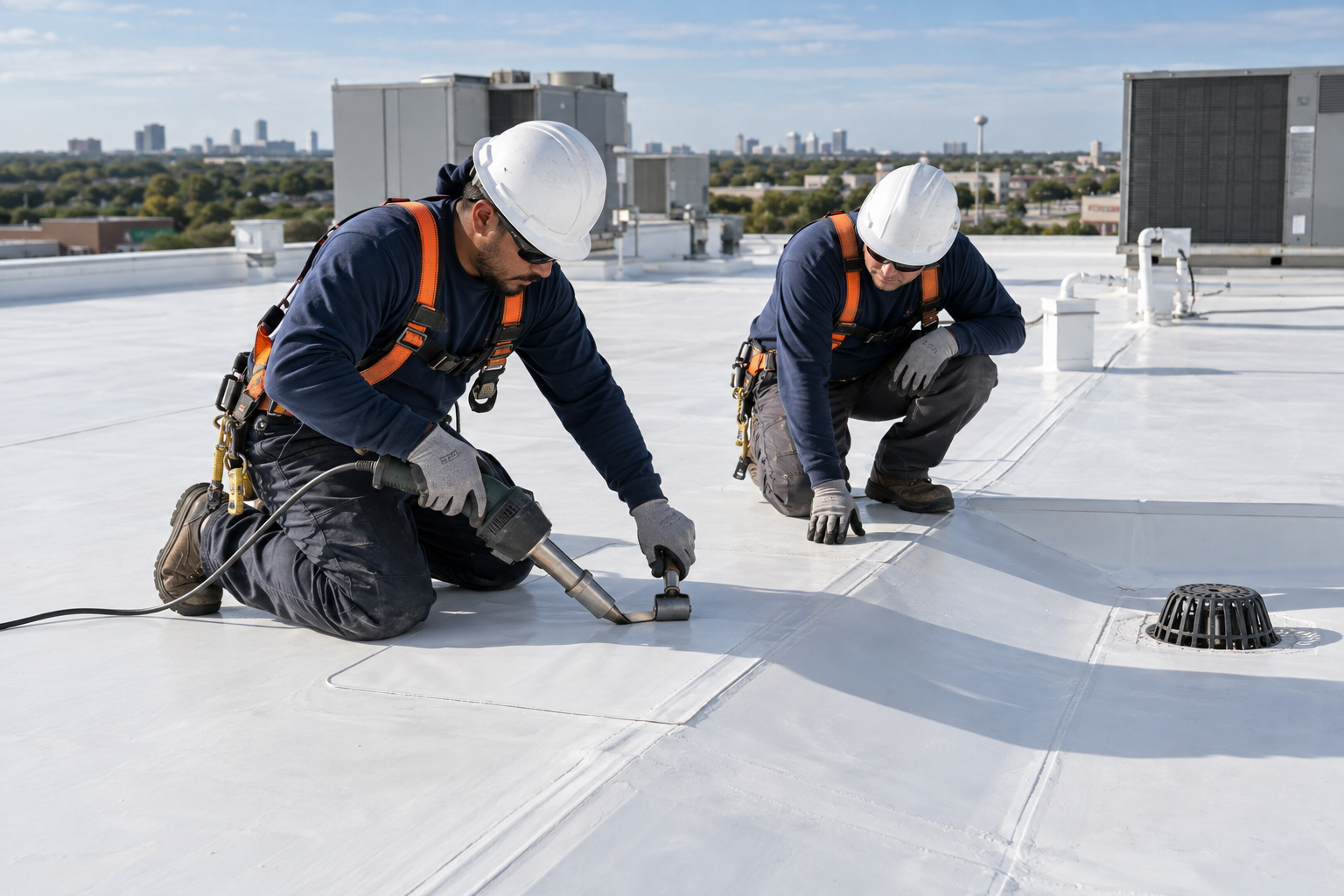
Permanent TPO repair requires preparation, compatible membrane, controlled heat welding, and seam verification.
Asphalt Shingle Repairs
Shingle repair may involve replacing missing or damaged shingles, ridge caps, pipe boots, flashing, underlayment, or limited decking. The contractor should match dimensions and installation requirements as closely as practical, use correct fasteners, avoid damaging surrounding shingles, and address the water pathway beneath the visible surface.
Color matching can be imperfect because existing shingles weather and product lines change. More importantly, replacing a few shingles will not correct widespread brittleness, granule loss, poor ventilation, or an aged underlayment system.
TPO Roof Repairs
TPO repairs typically require cleaning, preparation, compatible membrane, heat welding, and probing of completed seams. The contractor should examine adjacent welds, penetrations, curbs, drains, and insulation. Surface sealant alone is not a substitute for a properly welded repair where membrane work is required.
PVC Roof Repairs
PVC also relies on compatible materials and controlled heat-welded seams. Chemical or grease exposure, plasticizer loss, membrane age, and existing product compatibility may affect the repair method. Restaurant roofs and industrial properties may need special evaluation around exhaust areas.
EPDM Roof Repairs
EPDM repairs use approved cleaners, primers, tapes, uncured flashing, cover strips, adhesives, and other accessories depending on the detail. Preparation is essential. Products intended for another membrane should not be substituted simply because they are available.
Modified Bitumen Repairs
Modified bitumen may be APP, SBS, torch-applied, hot-applied, cold-applied, self-adhered, or mechanically attached. The roofer should identify the assembly before selecting a method. Fire controls, property protection, compatible reinforcement, and correct lap treatment are critical.
Metal Roof Repairs
Metal repairs may address fasteners, seams, closures, penetrations, flashings, oxidation, panels, gutters, or edge details. The solution must allow for thermal movement. Smearing rigid sealant across a moving joint may create a short-lived patch and make future preparation harder.
Roof Coating Repairs
Coating repairs require identification of the existing chemistry, cleaning, dry conditions, adhesion, reinforcement, and compatible finish material. Acrylic, silicone, urethane, and reinforced systems are not interchangeable. The contractor should correct the underlying defect rather than merely adding thickness around a leak report.
Residential Roof Repair Services in Texas
Residential repairs protect more than the visible roof covering. Water can affect decking, attic insulation, electrical components, drywall, flooring, and personal property. A residential roofer should evaluate the full water-shedding system, including underlayment, ventilation, flashings, valleys, penetrations, gutters, and transitions.
Homeowners should receive photographs and a scope that identifies the repair location and materials. If storm damage may be involved, document the condition before work while completing reasonable emergency measures to prevent further loss. Keep invoices and ask the insurer about policy duties and deadlines.
Showtime Exteriors answers common homeowner and commercial questions in its roofing FAQ. A knowledgeable contractor can explain roofing observations and estimates, but policy interpretation and coverage decisions remain with the insurer and appropriately licensed professionals.
Commercial Roof Repair Services in Texas
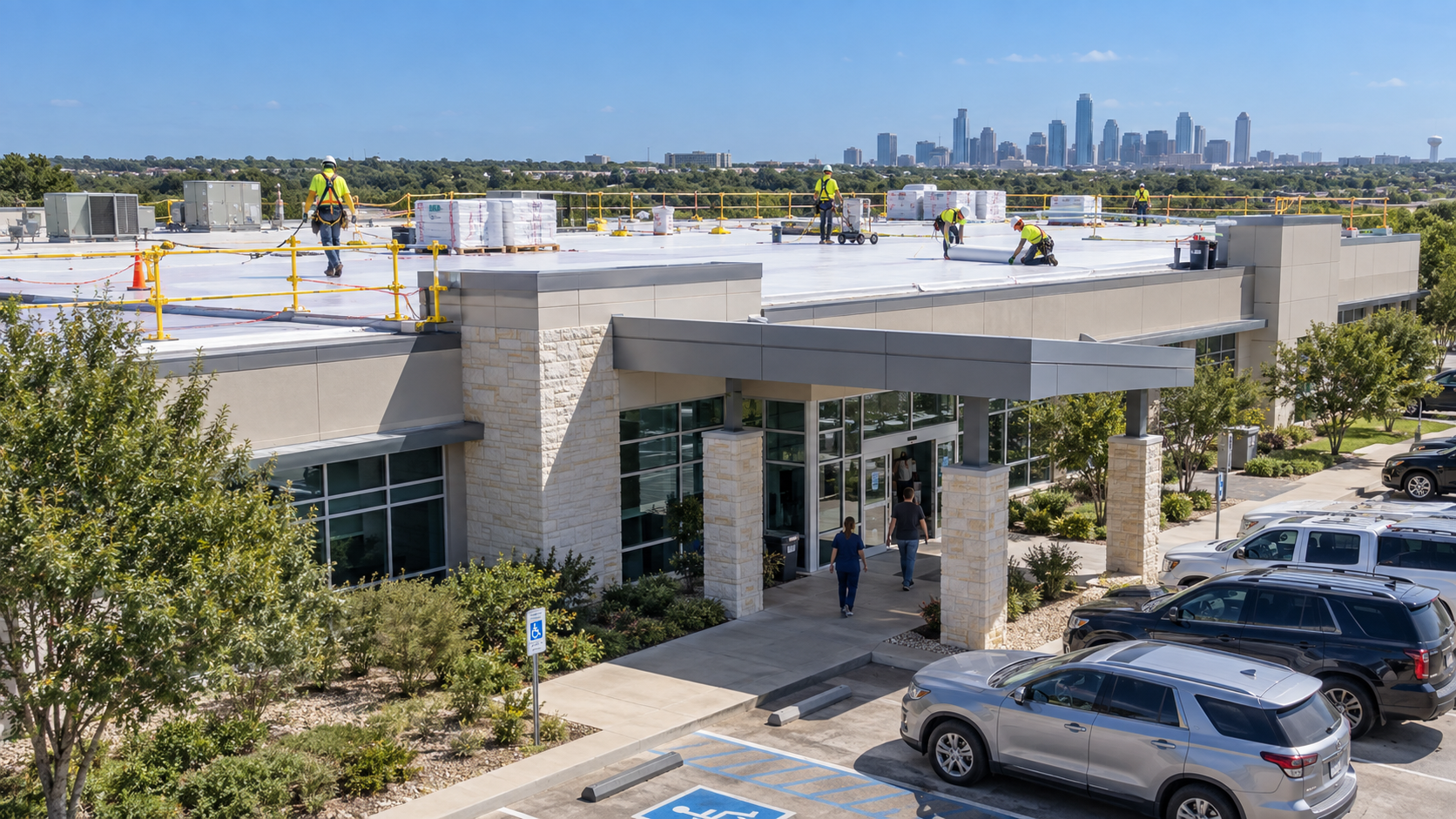
Commercial repair requires coordination with business operations, tenants, safety programs, rooftop equipment service, deliveries, and interior protection. A leak above a medical office, restaurant, warehouse, retail store, data area, apartment building, or industrial facility creates different risks.
The contractor should map roof areas, document defects, establish safe access, protect occupants and inventory, coordinate shutdowns when necessary, and phase work around weather and operations. Repairs around HVAC units may require mechanical coordination. Wet insulation should be defined and removed rather than sealed inside the assembly.
Owners managing multiple properties benefit from consistent reporting: roof plan, numbered defect locations, photographs, repair priority, completed-work photos, warranty notes, and recommended inspection dates. That information supports budgeting and reduces dependence on memory when staff or vendors change.
Storm Damage and Insurance Claim Documentation
After hail or wind, photograph accessible exterior and interior conditions from safe locations. Record the date, time, affected rooms, active water entry, and emergency actions. Save damaged materials when practical, retain receipts, and review the policy's notification and mitigation requirements.
The Texas Department of Insurance publishes storm recovery guidance for consumers. Policy terms, deductibles, exclusions, deadlines, depreciation, and settlement procedures vary. Contact the carrier or insurance professional for guidance specific to the policy.
A roofer can inspect, document physical conditions, prepare a repair or replacement estimate, meet at the property, and perform authorized work. The roofer should not promise approval, guarantee payment, interpret coverage as an attorney or public adjuster, exaggerate damage, or offer improper deductible arrangements.
Accurate reports distinguish storm-related observations from age, wear, foot traffic, mechanical damage, manufacturing characteristics, maintenance issues, and prior repairs. Credible evidence is more useful than dramatic language.
What a Roof Repair Estimate Should Include
A professional estimate should identify the roof area, observed condition, proposed work, removal, preparation, materials, quantities or dimensions, substrate assumptions, flashing method, disposal, protection, cleanup, price, schedule, warranty, exclusions, and change-order process.
Ask whether wet insulation or damaged decking is included. If concealed conditions cannot be priced in advance, the estimate should state unit prices, allowances, or approval procedures. Ask whether the work is temporary or permanent and whether adjacent conditions are excluded.
Price matters, but scope determines value. One quote may cover only visible sealant while another includes removal of wet materials, substrate repair, compatible membrane, reinforced flashing, testing, and documentation. Owners should compare equivalent work rather than totals alone.
Questions to Ask Before Hiring a Texas Roof Repair Company
Are You Experienced With This Roof System?
Ask for examples involving the same material, defect, and building type. Residential shingle knowledge does not automatically translate to commercial membrane, metal, BUR, or coating repair.
How Will You Confirm the Leak Source?
The contractor should describe the exterior, interior, moisture, drainage, and detail investigation. Be cautious if the answer is simply to apply sealant wherever a stain appears.
What Materials Will You Use?
The proposal should name compatible products and explain preparation. Ask how the repair integrates with the existing assembly and whether manufacturer requirements affect the method.
Who Performs and Supervises the Work?
Confirm the responsible company, crew structure, superintendent, communication contact, and quality-control process. Ask how completed seams, fasteners, flashings, and cleanup will be checked.
What Documentation Will I Receive?
Request before-and-after photographs, scope, invoice, warranty, limitations, and maintenance recommendations. Commercial owners may also need a roof plan and repair log.
What Happens if Hidden Damage Is Found?
The agreement should define how wet insulation, deteriorated decking, extra layers, or other concealed conditions are documented, priced, and approved.
Contractor Insurance, Safety, and Property Protection
Ask the roofing company for current insurance documentation and clarify responsibility for the work. The Texas Department of Insurance explains that certificates of insurance show evidence of coverage, although the actual policy controls its terms.
Roof work involves fall, ladder, electrical, weather, heat, tool, material-handling, and pedestrian hazards. OSHA provides roofing safety resources for employers and workers. The contractor should plan access, fall protection, staging, housekeeping, weather response, and separation from occupants.
Property protection may include landscaping, vehicles, walkways, windows, doors, equipment, ceilings, inventory, and neighboring areas. Daily work should be made watertight before the crew leaves whenever the scope opens the roof. Temporary tie-ins deserve specific quality checks.
Roof Repair Warranties and Their Limits
A repair warranty should identify who issued it, how long it lasts, what repaired area it covers, how service is requested, and what conditions are excluded. A limited repair warranty is not the same as a manufacturer system warranty on a complete roof.
Storm damage, new punctures, unauthorized penetrations, structural movement, equipment leaks, chemical exposure, clogged drainage, standing water, or failures outside the repair area may be excluded. Read the actual document and keep it with photographs and invoices.
The Federal Trade Commission's warranty guidance explains general consumer considerations. Project-specific rights and obligations come from the contract, warranty, applicable law, and policy terms—not a salesperson's verbal promise.
How Roof Maintenance Reduces Emergency Repairs
Routine maintenance cannot prevent every storm loss, but it can identify small defects before they become interior emergencies. Inspections are especially useful after severe weather, before insurance renewal, before major tenant improvements, and after other trades work on the roof.
The U.S. Department of Energy also explains general cool roof considerations that owners can review when planning reflective repairs or replacement.
Maintenance may include clearing drains and debris, checking flashings and seams, sealing appropriate details, repairing punctures, securing loose components, documenting traffic damage, and updating the roof plan. It should not be used to disguise widespread deterioration.
Keep a record of inspections, leak calls, photographs, invoices, material data, warranties, and rooftop work by other trades. A consistent history helps a contractor diagnose recurring problems and helps the owner plan capital spending.
Common Roof Repair Mistakes to Avoid
Do not allow repeated caulk-only patches without investigation. Do not mix incompatible products. Do not coat over wet insulation. Do not assume a ceiling stain identifies the exterior defect. Do not let unqualified trades create new penetrations without proper flashing. Do not postpone permanent work simply because a tarp stopped visible dripping.
Avoid choosing solely by the lowest total, the longest verbal warranty, or a promise of guaranteed insurance payment. Avoid contractors who cannot identify the roof system, refuse to document their scope, exaggerate damage, or pressure the owner to sign before questions are answered.
Most importantly, do not treat an aging gravel-surfaced BUR roof as easy to inspect or maintain. Hidden conditions require evidence, and continuing to patch an uncertain assembly may increase both building and insurance risk.
Why Choose Showtime Exteriors for Texas Roof Repair?
Showtime Exteriors serves residential and commercial property owners with inspection, repair, restoration, replacement, storm response, and long-term planning. The company evaluates asphalt shingles, metal, TPO, PVC, EPDM, modified bitumen, coatings, and built-up systems while tailoring recommendations to the actual property.
The approach begins with condition, not a predetermined sale. Owners receive practical guidance about urgent repairs, moisture concerns, compatible methods, service-life expectations, and the point at which replacement becomes more responsible. Commercial recommendations account for occupants, operations, documentation, insurance concerns, and future maintenance.
Property owners can review Showtime Exteriors' project references and contact the roofing team to discuss a leak, storm event, repair plan, or commercial roof assessment. Call 817-400-ROOF (7663) for service.
Frequently Asked Questions About Roof Repair in Texas
How quickly should I address a roof leak?
Address active water entry immediately from safe locations and arrange a professional evaluation as soon as possible. Emergency protection may reduce further damage, but it should be followed by diagnosis and permanent repair.
Can hail damage be repaired, or does the roof need replacement?
It depends on material, age, damage extent, repairability, matching, substrate condition, and policy terms. Localized damage may be repairable; widespread functional damage or an aged, brittle system may make replacement more practical.
How much does roof repair cost in Texas?
Cost depends on roof type, access, defect size, materials, wet insulation, deck damage, height, safety, emergency timing, and warranty. An inspection and written scope are necessary for meaningful pricing.
Will a roof repair guarantee insurance renewal?
No. A repair can improve the documented condition of a roof, but underwriting decisions belong to the carrier. Roof type, age, claims, building characteristics, and carrier rules may all affect renewal.
Can a coating stop every commercial roof leak?
No. Coatings require a suitable, dry, stable substrate and proper preparation. They should not be used to bury wet insulation, failed flashings, structural problems, or widespread deterioration.
Should an aging gravel roof be repaired again?
Only after adequate investigation. Gravel can conceal the waterproofing surface and underlying defects. Moisture evaluation, selected gravel displacement, core samples, and analysis of remaining service life may show that replacement is the safer long-term choice.
What should I receive after the repair?
Request before-and-after photographs, a detailed invoice or completion record, warranty terms, identified limitations, and maintenance recommendations. Commercial owners should maintain a roof plan and repair log.
Final Checklist for Selecting the Best Roof Repair Services in Texas
Choose a contractor that identifies the roof system, investigates the failure pathway, documents findings, proposes compatible work, explains repair limitations, carries appropriate insurance, plans safety and property protection, and provides a written warranty. Compare scopes rather than price alone.
For commercial properties, require attention to moisture, drainage, operations, rooftop equipment, and long-term planning. For aging gravel-surfaced BUR, insist on evidence and do not accept positive or cosmetic framing that minimizes concealed deterioration and insurance concerns.
Showtime Exteriors helps Texas property owners move from uncertainty to a documented plan. Whether the right answer is a localized repair, emergency protection followed by permanent work, restoration, or complete replacement, the decision should be based on the roof's actual condition. Call 817-400-ROOF (7663) to schedule an evaluation.